
Occasionally, a good comment will lead to a new article, and Dabor’s comment on the previous article, which touched on (partial) mutual intelligibility of Slavic languages, was exactly one such comment. I started typing an answer… and quickly found out that it wouldn’t fit any reasonable comment window.
We will leave out German, with which most English speakers are already acquainted, and concentrate on the rest.
For a native English speaker, the very idea of meeting someone speaking a closely related language is somewhat exotic. English, with its peculiar history (hello, Normans!), is a loner in the Germanic language family, quite distant from the rest. Depending on how generous you are with the dialect-vs-language classification, its nearest extant relative is either Scots or West Frisian, a small language spoken in northern Netherlands.
This is a funny dialogue between someone who speaks Old English and asks a Frisian farmer for a brown cow that produces a lot of milk for cheese and butter. Given that these are fairly ancient words, the relationship is still unmistakable after 1500 years of mutual separation:
Frisian: “Bûter, brea, en griene tsiis is goed Ingelsk en goed Frysk”
English: “Butter, bread, and green cheese is good English and good Frisian”.
More modern topics are obviously harder to parse:
But, as one of the commenters says: “It’s like English, but without the words.” and another adds: “As a native English speaker, I have no doubt that if we were both drunk we’d understand each other perfectly.”
So, if you want to experience the feelings of a Pole who just arrived in Croatia, book a trip to the north of the Netherlands and start asking the locals for cheese. Cheese is a good topic to bond over anyway.
Back to Central Europe. We should deal with the odd ones first, and the odd ones are the Hungarians, a totally different people in the midst of an Indo-European crowd. Their language has nothing in common with the rest of the region, even the most basic words like one, two, three, mother, father, brother are simply unrecognizable. Spoken Hungarian sounds a bit like an incantation, and Hungarian artists do sometimes exploit this. Just listen to this piece of music.
Hungarian is not a complete language isolate, but for all practical purposes it might as well be. Its closest extant relatives are Finnish, Estonian, and a bunch of tribal pagan languages slowly dwindling in the forests of northern Russia and western Siberia. But closest does not mean close and, for a random Finn, spoken Hungarian sounds totally alien. You need the scientific tools from the field of comparative linguistics to prove the ancestral connection; it is not obvious to anyone alive today.
This contributes to feelings of isolation and peculiarity that the Hungarians have against, well, everyone else, and also explains their intense patriotism. The Hungarians know that they are one of a kind and that if they die out, their entire thousand-year culture goes away with them. Their birth rate isn’t really better than anywhere else, but they will also not toy around with massive immigration from the outside. The fact that it was Orbán’s Hungary which first erected physical barriers against the migration wave of 2015 and started spraying the migrants with tear gas cannot be simply explained by the fact that Orbán was right-wing. On this topic, a supermajority of his nation was behind him.
From the linguistic point of view, we should note that there is a specific group of words in Hungarian that is of clearly Slavic origin and modern Slavs can perceive those Slavic words just fine. It has everything to do with early Hungarian history.
Early medieval Hungarians (~ 9th to 10th century) came from the steppe as nomadic raiders. They were very good with their spears and bows, but their only contact with agriculture happened when they were torching the hut of some hapless peasant named Jaromír over his head.
Of course this could not last forever, and when the rest of Central Europe persuaded them1 to give up their glorious marauding ways, the Hungarians started building their kingdom of St. Stephen in the fertile Pannonian plain. And quickly found out that some agricultural terminology would be handy, if only to tell the now-subjugated Jaromírs what to do. So, instead of developing their own words, they simply adopted the Slavic ones.
And so, a weaver is takács (CZ: tkadlec), a smith is kovács (CZ: kovář), a courtyard or a manor is udvar (CZ: dvůr), cherries are cseresznye (CZ: třešně, SK: čerešně) and a liquor made of fruit is pálinka (CZ: pálenka).
The latter is very important, as this is the word which finally made the Hungarians into full card-carrying members of the Western Civilization. You don’t get to be a full card-carrying member of the Western Civilization until you learn how to turn half of your garden into alcohol, obviously.
OK, those were the Hungarians. Now to the Slavs. The Slavic language family has three main branches: Western Slavs, Eastern Slavs and Southern Slavs.
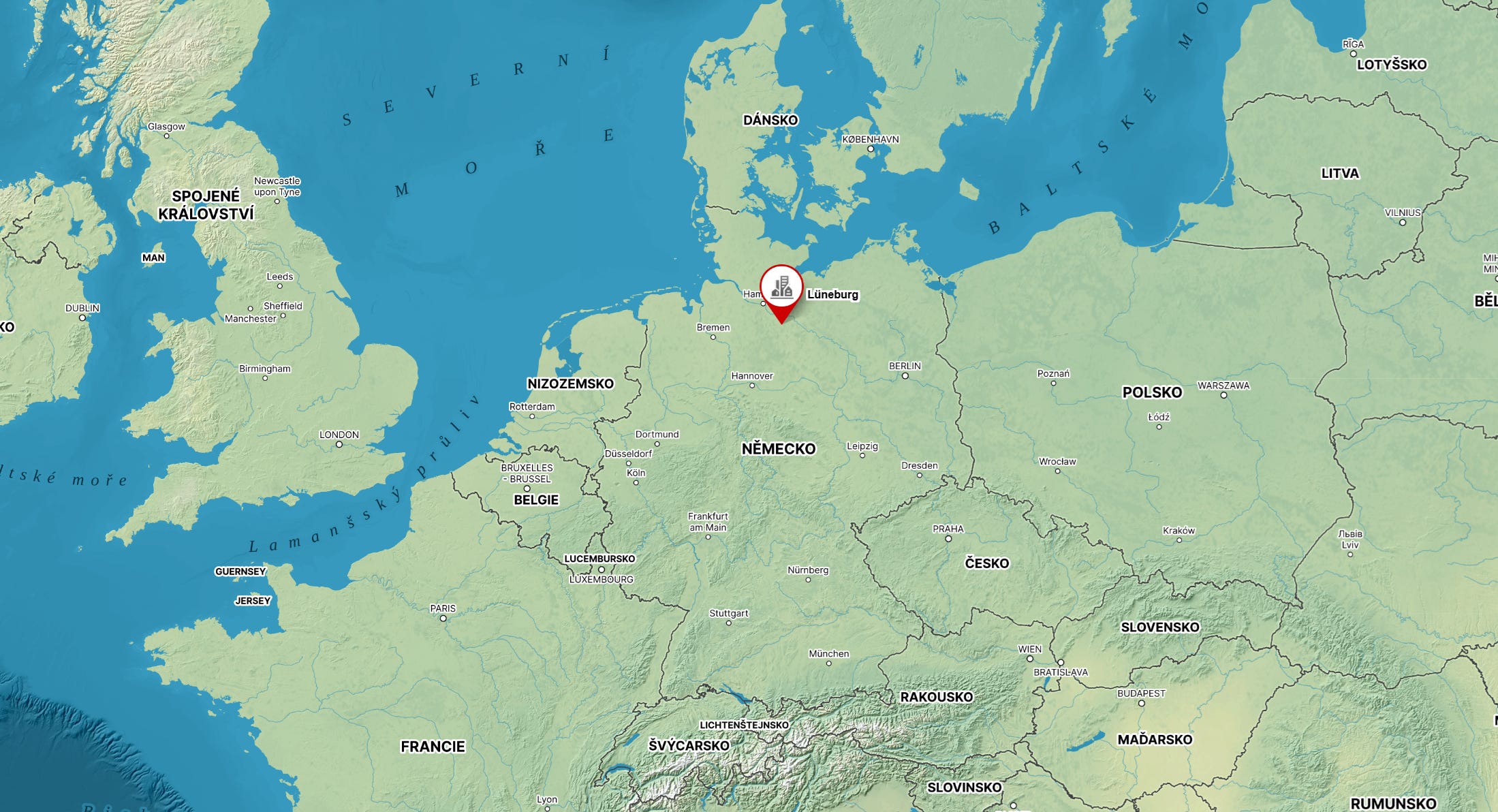
The westernmost of the Western Slavs are no longer there. They were the Polabians, living in what is now northern and eastern Germany. They really liked their pagan ways and resisted any attempts at Christianization violently, which worked until it didn’t. Then, they were overrun by mostly German Crusaders2 in the 12th century. For a few centuries, their languages lingered in the countryside (not so much in the cities), until the Thirty Years’ War (1618-1648) devastated northern Germany so terribly that entire swaths of land became depopulated. The last written record of a still-spoken Polabian language comes from the first third of the 18th century from a forested region that is called Lüneburg Wendland (Wendland meaning quite literally land of the Slavs), which lies surprisingly far to the west, just southeast of Hamburg. This was once the high-water mark of the Slavic expansion westwards.
Some of the eastern German placenames, like Leipzig, are still recognizably Slavic in origin (CZ: Lipsko, meaning a place of linden trees). Dresden was originally Drežďany, meaning the people of a dense forest. Some, like Berlin, are disputed.
There is one small group of those Slavs that survived until today, the Lusatian Sorbs. They live in a bunch of villages next to the Polish-Czech-German border triangle and they are Christians, but they also adapted a lot of their original pagan customs into a Christian framework. In Germany, they are known for their Easter rides around fields.
This is one of their Easter rides which I recorded on a potato 15 years ago in their village of Radwor.
When it comes to their language, the closest I can describe it is “sounds like medieval Czech, but with a German accent”. All the remaining ethnic Sorbs are now bilingual and consume German media, so they cannot escape the influence of German, especially on their pronunciation. But at least in Upper Lusatia, the language does not seem to be dying out just yet. Much like many other smaller nations, the Sorbs go out of their way to preserve their heritage.
The big Western Slavic nations - the Poles, the Czechs and the Slovaks - nowadays each have their own state. Mutual intelligibility is somewhat complicated, but a lot depends on the political and cultural context.
Czech and Slovak were once considered fully mutually intelligible, but the relationship has grown a bit asymmetric in the last generation. The Czech market (almost 11 million people) is much bigger than the Slovak one (5 million people), which means that a lot of books or magazines are printed in Czech only and Slovaks are used to reading texts and listening to podcasts in Czech. The opposite only happens very rarely, and a typical Czech reader won’t read a single Slovak book in a decade. This contributed to the fact that the youngest Czechs find Slovak a bit less comprehensible than they used to during the old federal times of defunct Czechoslovakia.
Eastern Slovak folks (“Východňari”) speak dialects full of Rusyn and Hungarian words that are on the edge of intelligibility for regular Slovaks.
Czech and Polish sound to each other a bit as if a small kid was trying to speak and was mangling the language in a cute way. People from the Northeast of Czechia, where I live, are used to everyday contact with the Poles - there is no mountain range there to separate the nations, and a lot of mutual visits and trade. Therefore, they tend to understand Polish quite well. For someone from Prague, though, Polish may sound a bit obscure.
Speaking is one thing, though, and reading or writing another one. Broadly taken, all Western and some Southern Slavic nations adopted the Latin alphabet, while the rest of the South and all of the Easterners write in Cyrillic letters (a.k.a. azbuka). These are obviously related, but not so closely related as to be comprehensible to the others without actual training.
Again, the situation is asymmetric. The Cyrillic users are taught the Latin alphabet in school. The Latin guys outside Yugoslavia only used to be taught Cyrillic during the era of Soviet dominance, but once it was over, the Cyrillic was dropped from the curriculum and the under-45 people in Central Europe can usually no longer read it.
There are quite important differences in the Latin family as well, especially one. Poland still uses an archaic compound spelling (sz, cz), which the others have either never used, or abandoned for a more modern system3 of accentuated characters (the dreaded ř). The Czechs, the Slovaks, the Sorbs, the Slovenes, the Croats, the Bosniaks, and even the more distantly related Baltic nations (the Latvians and the Lithuanians) are now in the accentuated camp and love their weird carons and accents, leaving the Poles as the holdouts.
Mutual intelligibility with the Eastern and Southern Slavic branches is more complicated and naive speakers without any training will struggle. The common ancestry is still obviously there, but unlike the Western Slavs, whose vocabulary was mostly influenced by German (and, in Slovakia, Hungarian), the South and the East used to be under Turkish or Tatar rule and absorbed certain vocabulary from them, including some very common words. For example, Bulgarian khubav (nice, beautiful) comes from Persian and Russian loshad (horse) is Tatar.
The oddest one here is Bulgarian, which lost most of the Slavic word flexibility and gained a definite article, albeit as a suffix (vlak = train, vlakat = the train), precisely the things that we Slavs struggle with in English. Understanding spoken Bulgarian without any previous knowledge is a real challenge for anyone from Central or Eastern Europe.
Mutual intelligibility of Russian with other languages changed over the decades, again due to the political developments east of the Iron Curtain. During the Communist Era, Russian was usually a compulsory subject, taught for 7-10 years, which significantly expanded the ability of the smaller nations to understand the Russians and communicate with them. Hence, in 1968, when the Soviet forces poured into Czechoslovakia, the locals were able to tell them the basics: that there is peace in the country, that they aren’t being terrorized by any ‘fascists’, that no one asked them to arrive4 and that they should GTFO home.
“OK, now I want to learn Czech!”
Why would you do this to yourself, friend? Ours is a complicated language. Quite rarely (though not uniquely), it can form words without vowels. Try pronouncing this:
If your reason hasn’t left you, you might be ready to face the worst opponent of them all, the final boss: the mighty Ř.
OK, who am I kidding, I am a native myself and I don’t pronounce Ř very clearly. Anyway, you are welcome, thanks for reading this introduction into the Central European Babel and if you can say “pět piv” (“five beers”), you are halfway to Czechdom already.
Ahoj!
(Yes, that is a sailor’s greeting which somehow put down roots in a landlocked country. If you can understand this, you will have no problem understanding the entire region.)
The extent of AI use in this article: 33 grammatical errors and bad word choices corrected. Three unclear formulations cleaned up. Zero editing.
“Persuaded” in the early Medieval sense of a brutal military defeat, followed by some high-profile executions.
Those are likely the Crusades that you never heard of. During the Middle Ages, there were still quite a lot of pagans left in Europe proper, and they were dealt with harshly.
Which still means “originating in the 15th century”, but compared to the compound spelling it is still modern.
In fact, someone did. There was a secret “invitation letter”, sent by five Czechoslovak Communist hardliners to Moscow, asking for brotherly help. About the clearest example of high treason, it lay in Soviet archives until someone dug it up in 1992 and published it. Unfortunately, none of the signers faced any serious punishment, except for Kapek, who shot himself before the letter even saw the light of the day; bad conscience?
People always say that Czech is hard to learn because of words without vowels, or ř, but I think that's not really true, in English you have syllables with a schwa (very weak vowel) or no vowel, depending on dialect. For example the second syllable of "farmer". English also has sounds that are exotic, like the two th sounds, or like 20-30 different vowel sounds, or the fact that they don't distinguish p and b at the start of a word like you'd expect, instead it's aspirated p and unaspirated p.
What is really difficult IMO are the 7 noun cases x 2 numbers x 14 declensions - Latin, reputed to be hard, doesn't have that many! And that's the 'official' declensions, you could point out many irregularities within them, and there are pronoun and adjective declensions (and a noun can have an adjective declension! And also neopronouns are basically impossible because you'd have to have everyone remember like 14 forms instead of something like "xe/xer"). And the verbs, I've never realized they're so difficult until Brother came home from elementary school and told me we have 5 classes of verbs with completely different suffix sets!
Unsurprisingly, the Hungarian words "takács" and "kovács" appear even more Slavic when compared to their Slovak, not Czech, equivalents.
Moreover, when you mentioned that Hungarian has a completely non-Indo-European word for brother, I thought hey, there surely is the word "barát", which is undeniably of Slavic origin (compare with Slovak "brat", lit. "brother") and I've heard it many times. Indeed there is, but that word actually means "friend", not "brother", in Hungarian. :-)